Padding the Plan: A Late-Autumn London Day Out That Can Take a Tube Puncture
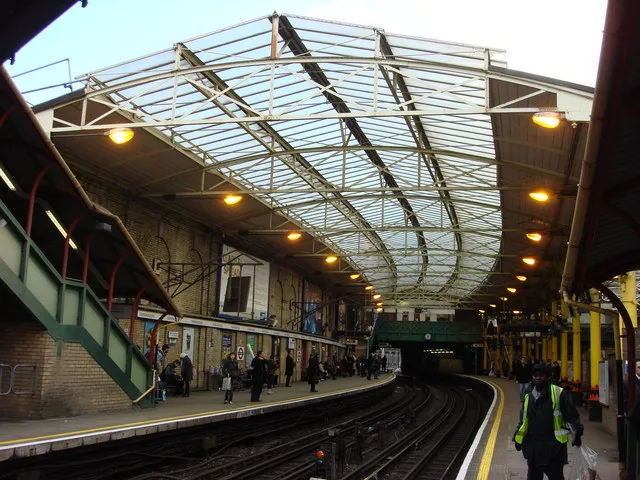
Photo: Oxyman, CC BY-SA 2.0, via Wikimedia Commons
Most London itineraries do not fail because the sights are too far apart. They fail at the seams: the 12-minute walk from the ticket hall to the right platform, the lift queue at Covent Garden, the change at Bank that looked simple on the map. By mid-afternoon, the plan is running late and everyone is arguing about whether to skip the last stop.
The fix is not to move faster. It is to build a day out with padding in the right places. Call it the 20-minute rule: for most central London hops, budget 20 minutes door-to-door rather than trusting the train time. For cross-river journeys or major interchanges, budget 30. Then use that honest number to choose fewer, better-connected stops.
What the 20-minute rule actually means
It is not a claim that every Tube journey takes 20 minutes. It is a padding unit. A ride from King's Cross St Pancras to Oxford Circus might be around 10 minutes in the tunnel, but add the walk to the platform, the wait, the escalator and the exit, and 20 minutes is a fair central London estimate. If you change at Green Park, Bank or Paddington, add more. If you are carrying bags, travelling with children or arriving in the late-autumn dusk, add more again.
In November 2026, darkness arrives early and the pavements are damp. A route that feels brisk in a guidebook can feel like a slog at 16:30. Use TfL Go or Citymapper, but treat the estimate as a best case, not a promise. The 20-minute rule is there to stop you from booking your day too tightly.
Pick anchors, not pins
A good London day has two or three anchors. An anchor is the reason you are in that area: a museum, a market, a cathedral, a show. Everything else is optional. Each anchor should have a backup within a five- to ten-minute walk, so a closed gallery or a sudden shower does not mean a cross-city rescue mission.
For a central London example, start with the British Museum as your morning anchor. Arrive via Tottenham Court Road or Russell Square, and give yourself 20 minutes from the hotel even if the map says 12. Lunch in Bloomsbury, then move to Covent Garden for the afternoon. The Piccadilly line from Russell Square to Covent Garden is direct, but Covent Garden station is busy and not the easiest with a buggy or a suitcase. Walking through Bloomsbury takes about the same time and is far more pleasant when the weather is kind.
Your backup for Covent Garden could be the London Transport Museum if the rain sets in, or Neal's Yard if the Piazza is heaving. The point is that the backup is close. You are not replanning the day; you are stepping sideways.
If you try to add a third anchor such as Tower Bridge, the maths breaks. You would spend the best part of an hour moving across town, and the day becomes a delivery route rather than a day out. Two anchors and one good walk will almost always beat four rushed stops.
The cross-river route: one bridge, not three Tube changes
Cross-river days are where optimistic plans come unstuck. The Tube map compresses the Thames, but interchanges around Bank, Monument and London Bridge can involve long walks and crowded platforms.
A better cross-river route is walk-led. Start at St Paul's Cathedral, cross the Millennium Bridge to Tate Modern, then follow the river to Borough Market and finish at London Bridge. You get two major sights, one of the best walks in London and straightforward stations at either end. Budget 20 minutes from your hotel to St Paul's, 15 minutes for the bridge walk, 20 minutes from Tate Modern to Borough Market, and 15 minutes to London Bridge station. That is a realistic shape for a day.
If the Millennium Bridge is packed or the weather turns, use Blackfriars station as your escape hatch and walk along the river from there. If Tate Modern is too busy, skip it and go straight to Borough Market. If Borough Market is too crowded for lunch, the backup is the streets around London Bridge rather than a Tube ride to somewhere else.
This is the 20-minute rule in practice: one long, enjoyable walk replaces two stressful Tube hops. You see more, and you spend less time underground.
Build in a disruption buffer
Check the TfL status board before you leave in the morning. If a line is part-suspended, do not try to heroically reroute around it. Switch to the walk-led version of your day. Keep one free hour in the plan, especially if you have a timed entry or a train to catch later.
Book timed entries with a margin. If your museum slot is at 10:00, aim to be in the area at 09:40. If you have a train from King's Cross at 18:00, stop moving across London by 16:30. The last hour of a day out is not the time to attempt a cross-city dash with a suitcase.
A simple template for a smoother day
Choose two anchors, not five. Give each one a nearby backup. Allow 20 minutes for each central hop and 30 for cross-river or major interchange moves. Replace one Tube journey with a walk. Stay in one neighbourhood where you can. Keep the last movement of the day simple and early.
London rewards people who leave room for it. A day out with padding is not a less ambitious day; it is a day that survives the Tube, the rain and the temptation to squeeze in one more stop.