Why Two Stops Is Often Too Many: The Central London Tube Hops Walking Beats
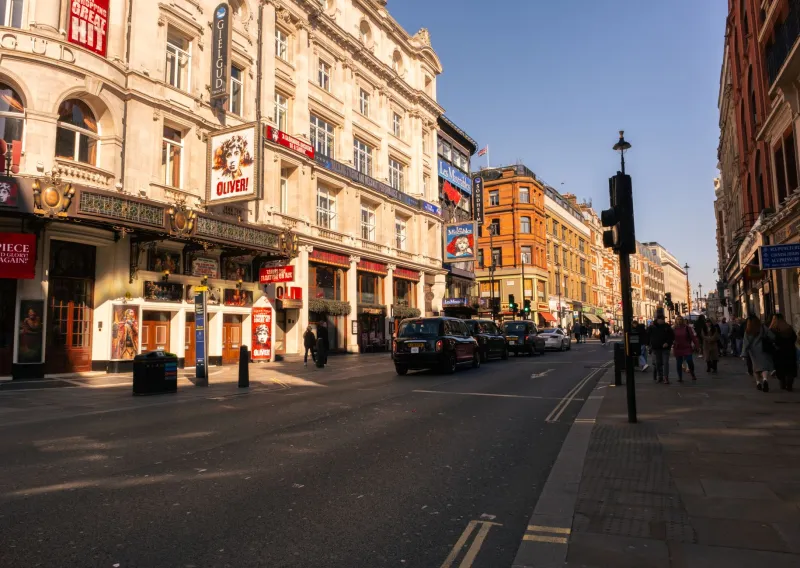
There is a particular kind of London regret that comes from standing on a Piccadilly line platform at Covent Garden, having already walked past three separate pubs you could have been sitting in. You paid for the privilege. You waited four minutes. You went one stop. And then you queued for a lift.
The two-stop rule exists to stop that happening. It is not a law, it is not enforced, and it will occasionally be wrong. But as a default setting for getting around Zone 1 on contactless in 2026, it saves more time than any journey-planning app will ever tell you.
The rule, in one line
If your Tube journey is two stops or fewer, check the walk before you tap in. Anything under about 12 minutes on foot usually wins.
The maths that app never shows you
A one-stop hop looks like two minutes. It is almost never two minutes. Door to door it is more like 12 to 18: two or three minutes to the station, down the stairs, a two-to-five-minute wait, the ride, then the escalator, the ticket hall, the exit, and the bit where you work out which direction you are facing.
Some stations make it worse. Covent Garden has lifts rather than escalators, and the queue at street level can eat five minutes on its own. Angel's platforms are so far down you could read a chapter on the way. Meanwhile 400 metres of pavement takes four minutes and shows you something.
The pairs worth knowing
These are all genuine one- or two-stop journeys where the walk is shorter, cheaper or simply nicer. Distances are approximate; timings assume a normal walking pace and no shopping bags.
| From | To | Walk | Tube stops |
|---|---|---|---|
| Covent Garden | Leicester Square | 300m, 4 min | 1 |
| Charing Cross | Embankment | 400m, 5 min | 1 |
| Mansion House | Cannon Street | 350m, 5 min | 1 |
| Goodge Street | Warren Street | 350m, 5 min | 1 |
| Barbican | Moorgate | 400m, 5 min | 1 |
| London Bridge | Borough | 450m, 6 min | 1 |
| Paddington | Edgware Road | 450m, 6 min | 1 |
| Aldgate | Liverpool Street | 500m, 7 min | 1 |
| Blackfriars | Temple | 550m, 7 min | 1 |
| Tottenham Court Road | Covent Garden | 550m, 7 min | 1 |
| Holborn | Chancery Lane | 600m, 8 min | 1 |
| Waterloo | Southwark | 600m, 8 min | 1 |
| Oxford Circus | Bond Street | 700m, 9 min | 1 (or 2 on the Elizabeth line) |
| Euston | King's Cross St Pancras | 750m, 10 min | 1 |
| Green Park | Piccadilly Circus | 750m, 10 min | 1 |
| Victoria | St James's Park | 800m, 10 min | 1 |
A few of these are properly pleasant walks rather than merely tolerable ones. Blackfriars to Temple runs along the river with the bridge behind you. Victoria to St James's Park cuts through the park itself. London Bridge to Borough is a straight shove down Borough High Street and lands you at the market.
Others are purely functional. Euston to King's Cross involves the Euston Road, which is nobody's idea of a stroll, but it is still faster than descending into the earth and coming back up 750 metres later, especially when the Northern line is having one of its days.
The money question
A Zone 1 contactless fare sits at just under three pounds at peak in 2026, less off-peak. Check TfL for the current figure before you budget, because it moves.
But here is the wrinkle that makes the decision less obvious than it looks: if you have already hit your daily or weekly cap, the extra hop costs you nothing. Free is not the same as fast, though. A free 15-minute detour is still 15 minutes you are not spending in a bookshop, so treat the cap as a tiebreaker rather than a reason.
When the rule breaks down
Ignore all of the above in the following situations, without guilt:
- It is raining properly. A four-minute walk in November drizzle with a coat that is not quite waterproof is worse than any Tube journey ever built.
- You have luggage. A wheelie bag halves your speed and doubles your irritation, particularly on the paving around Covent Garden and the crossing at Euston Road.
- You are on your own after dark. Central London is generally busy and well lit, but a strange side street at 23:00 is not the moment to prove a point about fresh air.
- Mobility is a factor. The walk might be 400 metres; the two flights of steps inside the station might be the real problem. Step-free access exists at plenty of Zone 1 stations and the Tube map shows it clearly.
- You are already at the barrier. Sunk cost applies. Once you are through the gate, walking is no longer an option in the same way.
- The stations' entrances are miles apart. Oxford Circus to Bond Street is 700 metres between the two Oxford Street entrances, but the walk between the actual platforms is longer than the map suggests. Check the exit you need, not the station pin.
- There is a big road in the way. The Strand, Park Lane, Euston Road and the gyratory around Aldwych all add crossing time that a map quietly ignores.
A quick decision checklist
Before you tap in, run through this. It takes about four seconds.
- Is the walk under 12 minutes? If yes, the walk is probably winning.
- Am I going two stops or fewer? If yes, question one even applies.
- Does the walk start and end at the right exits? A 600-metre walk between the wrong entrances becomes 900.
- What is the weather doing right now, not this morning? Look out of a window.
- Am I carrying anything, wearing anything silly, or travelling with anyone slow? Adjust accordingly.
- Have I already capped? If yes, the fare is a wash — decide purely on time and comfort.
The one habit worth building
When a journey planner gives you a two-stop route, open the map view instead of the directions view. Look at the straight line. If it passes through a park, along the river, or down a street you have heard of, walk it.
The Tube is a superb machine for covering distance. It is a poor machine for covering 500 metres. Knowing the difference is most of what makes a London trip feel smooth rather than shuffling.