Arm Out, Eyes Up: Flagging Down a London Bus Without the Guesswork
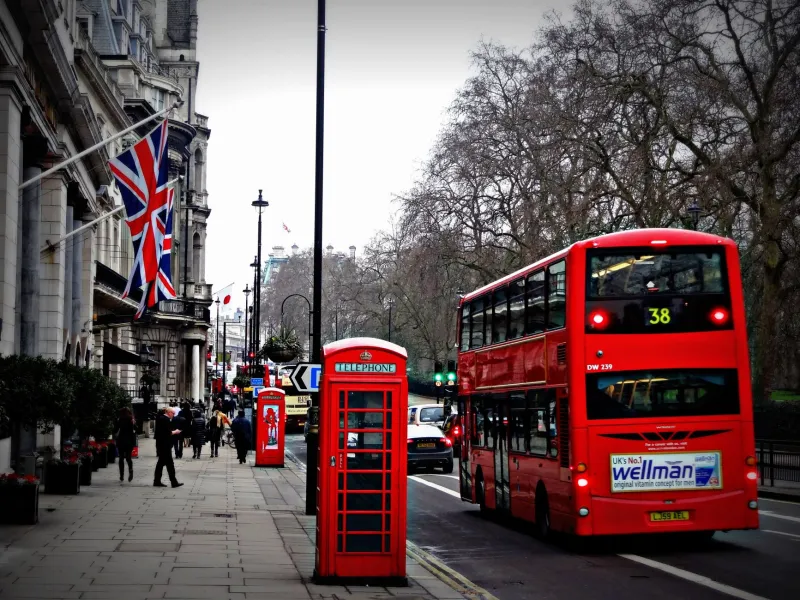
London buses are not telepathic. They are, however, quite literal. If you are at a request stop and you do not make it obvious that you want the bus, the driver is entitled to keep going. That is not rudeness; it is the system working as designed. The trick is to stop treating every pole as a passive piece of street furniture and start reading the stop before the bus arrives.
The three-second stop scan
Before you look at your phone, look at the pole. You are checking three things: the flag, the stand letter if there is one, and the route list. The flag is the red-and-white London bus sign; it tells you this is a stop. The stand letter, such as A, B or C, tells you which bay you need at a bus station or a big interchange. The route list tells you which services call here and, crucially, in which direction.
At somewhere like Victoria bus station or Hammersmith, the stand letter matters more than the postcode. Several routes may use the same station but different stands. The route tile on the stand will name the destination. If you wait at the wrong letter, you are not at the wrong stop in a vague sense; you are at a different stop entirely. The bus will pull into its own bay, do its thing, and leave while you are still decoding the signage.
Route suffixes are the other small print. Most London route numbers are just numbers. Where a letter appears, treat it as a different service until proven otherwise. An N-prefix means a night route, and night routes can follow slightly different paths from their daytime cousins. A 24-hour symbol means the route runs through the night, not that every bus is a night bus with a different number. If the blind says N15, do not assume it is the 15 running late. Read the destination, not just the digits.
Where the bus will stop, and where it will not
Most London bus stops are request stops. That means the bus stops if someone on board has pressed the bell, or if someone at the stop is clearly waiting to board. At a quiet stop, a bus with no one getting off will sail past a person who is merely standing near the pole looking at their phone. At a busy stop, the driver may stop anyway because there is a crowd, but you should not build your day around the kindness of crowds.
Bus stations are different. Buses pull in to their assigned stand, and you are expected to be at that stand. You still need to be visible and ready, but you do not usually need to flag down a bus in the middle of a bus station. Supermarket stops are the awkward middle ground. There may be a queue, there may be trolleys, there may be a bus that stops because three people are boarding. If you are the fourth person, standing behind a pillar with your headphones in, you are still invisible. Move to the flag.
One-way systems cause more confusion than any route suffix. The stop for the direction you want may be on a different street from the stop you used on the way in. The pole on the opposite side of the road is not necessarily the return journey. Check the route list and the destination on the blind. If the bus is showing a place you have never heard of, that is not automatically wrong; London is large. But if it is showing the place you just came from, you are probably on the wrong side.
The arm, the eye and the step back
Flagging a bus is a small physical performance. Stand at the flag, not behind it. Put your arm out clearly as the bus approaches, not a tentative half-wave and not a frantic semaphore, just a straight arm at roughly shoulder height. Make eye contact with the driver if you can. When the indicator ticks on, step back from the kerb. The bus has acknowledged you; now give it room to pull in.
Do not chase a bus that has already passed. Do not bang on the glass. Do not stand in the road to make a point. The next bus is usually the better option, and the driver has a schedule to keep.
A ten-second routine before you board
One: find the pole and read the stand letter if there is one. Two: match the route number and destination to the direction you want. Three: stand at the flag, not in the shelter. Four: signal clearly as the bus approaches. Five: have your card, phone or pass ready before you reach the door. Six: board without blocking the doorway while you search for a wallet.
That last point is not just etiquette. At busy stops, a slow boarding process is what makes the next person think their bus sailed past. Keep the queue moving.
Night buses and the flag
Night buses are still request stops. The N-prefix tells you it is a night route; the flag tells you where to wait. At night, visibility matters more, so stand near the light and signal early. If you are at a stop with several night routes, read the blind carefully. Two buses can look identical in the dark until the destination display resolves.
When it goes wrong
If your bus sails past, resist the urge to sprint. Check whether there is another stop around the corner, especially on one-way systems. If you are at a bus station, go back to the route tile and check the stand letter. If the route number has a letter, check whether you are looking at a night service or a variant. Ask staff if there are any; otherwise, the next bus is the plan.
London buses reward a bit of theatre. Arm out, eyes up, stand at the flag. The bus is not being difficult; it is waiting for a clear signal. Give it one.