A Comfortable Buffer: Loos, Charges and Quick Exits at London’s Busiest Stations
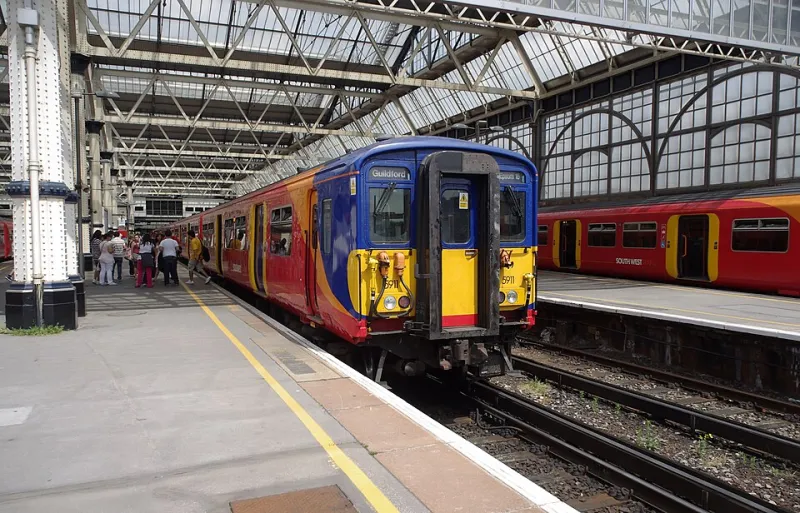
Photo: mattbuck (category), CC BY-SA 3.0, via Wikimedia Commons
London days are built on tight margins: one train, one interchange, one timed entry slot. Your bladder does not respect any of that. The good news is that the capital’s biggest stations almost always have a toilet. The less good news is that the station loo is often the busiest, least pleasant and sometimes paid option. The trick is to treat a comfort stop like any other part of the journey—know the fallback, know the nearby free option, and do not leave the station unless the clock genuinely allows it.
The rule of the barrier
If your next train leaves in under 15 minutes, stay inside the station and pay the charge. Missing a train to save 50p is a bad trade. If you have 20 to 30 minutes, a nearby free option can work—but only if you know it is open and you know the route back. Do not wander out of Waterloo or Paddington on a hunch. Station toilets are the safety net, not the plan.
At the major managed stations, expect a modest charge at the main toilet blocks. Some take contactless, some still want a coin, and queues swell after arrivals. Accessible toilets are usually available, but may need a Radar key or a word with staff. Prices and opening hours change, so treat any figure as a guide rather than a guarantee.
Euston: the British Library is the calm alternative
Euston is a station in a hurry, and its toilets feel it. The station blocks are handy if you are already on the concourse, but they are not a place to linger. If you have time, walk the five to seven minutes to the British Library. The toilets there are free, usually far calmer, and the building gives you a proper pause before the platform scrum. Check opening hours before you commit, and allow for a bag check at busy times.
The Wellcome Collection, a little further towards Euston Square, is another civilised option during opening hours. Neither is a substitute for a station loo when your train is boarding. Use them when you have a buffer, not when you are cutting it fine.
King’s Cross and St Pancras: two stations, one sensible plan
King’s Cross and St Pancras share a postcode and a problem: lots of people, limited loos, and a steady stream of luggage. Both stations have paid toilet facilities, and both can get grim at peak times. If you are changing between them, sort yourself out before you start the walk.
With half an hour to spare, the British Library is again the best nearby free option—roughly ten minutes on foot from King’s Cross. Closer to St Pancras, the cafes around Granary Square and Coal Drops Yard will let you use the facilities if you buy something, but that is a customer courtesy, not a public right. Do not march into a busy restaurant and expect a free pass.
Waterloo: follow the South Bank crowd
Waterloo is the busiest station in the country, and its toilets know it. The station blocks are paid and can queue badly, especially when a batch of trains lands at once. If you have time, exit towards the South Bank. The Royal Festival Hall, National Theatre and BFI Southbank all have toilets that are free to use during opening hours, and they are generally a more pleasant experience than the station concourse.
The walk is five to eight minutes depending on which exit you take. That is fine if you have 25 minutes. It is not fine if your train is announced and you are still on the Festival Hall steps. Check the opening times, especially in the evening, and keep your ticket or contactless card ready for the barriers on the way back.
Paddington: use the station, then move on
Paddington’s paid toilets are the practical choice if you are changing to the Elizabeth line or waiting for a train. The station is large, so ask staff if you cannot spot the signs—some blocks are tucked away near the main concourse rather than the platforms.
If you have time and need a quieter stop, the cafes around Sheldon Square offer facilities to customers, and Paddington Library is a short walk away during opening hours. Neither is worth a detour if your train is close. Paddington is not the place to discover a sudden interest in local architecture.
Victoria: know the station, then know the library
Victoria’s station toilets are paid and busy, particularly when Gatwick trains and coach arrivals collide. Use them if you are inside the station and the clock is against you. If you have a little more time, Victoria Library on Buckingham Palace Road is a useful nearby option during opening hours, and the cafes around Cardinal Place are handy if you are buying a coffee anyway.
Do not confuse Victoria station with Victoria coach station. They are close, but not the same building, and the walk between them eats more time than you think. Sort out the comfort stop before you commit to the coach queue.
Liverpool Street: the station first, Spitalfields second
Liverpool Street is a commuter machine, and its paid toilets do the job without ceremony. If you are changing to the Elizabeth line or heading for the Circle, H&C or Metropolitan lines, use the station facilities and keep moving. The concourse is not a place to drift.
With time to spare, Spitalfields Market is around eight minutes on foot and has public toilets that are usually free during market hours. Broadgate and the surrounding cafes are another option if you are buying something. Again, check the clock. Liverpool Street is not the spot to discover that your train leaves from a different platform than you thought.
The practical kit
Carry a contactless card and a small coin if you can. Keep a Radar key if you need one. Do not rely on your phone battery for a payment app when you are already low on charge. And remember the simplest rule of all: a paid station toilet is not a failure of planning. It is the plan working. The free options are there for when you have time to use them—not for when you are sprinting for a train.
London rewards people who build in a buffer. A comfort stop is just another buffer, and a much easier one to plan than a Tube puncture.