The Platform Has a Grammar: Reading London's Silent Commands Like a Local
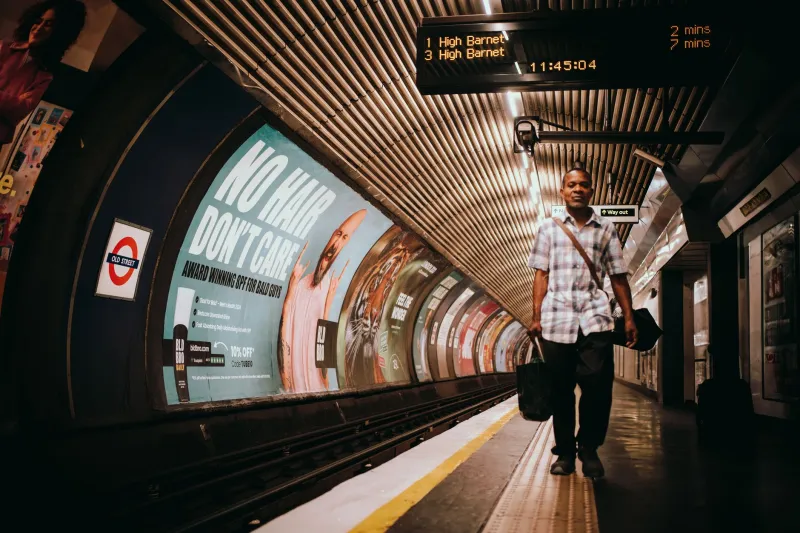
You can learn the Tube map in an afternoon. What takes longer is learning the grammar of the platform: the small, unspoken signals that tell you where to stand, when to move, and when to do absolutely nothing. Visitors often arrive braced for the gap — that booming recorded warning — and miss the fact that the gap is the least of it. The gap is a safety announcement. The choreography is the system.
None of this is written down anywhere official, which is exactly why it feels like a secret handshake. But it isn't mysterious once you know what you're looking at. London transport runs on throughput: the city is trying to move an extraordinary number of people through very old spaces, and most etiquette exists to stop one person's hesitation becoming forty people's delay. Learn the logic and the rules stop feeling arbitrary.
The escalator is a road, not a ride
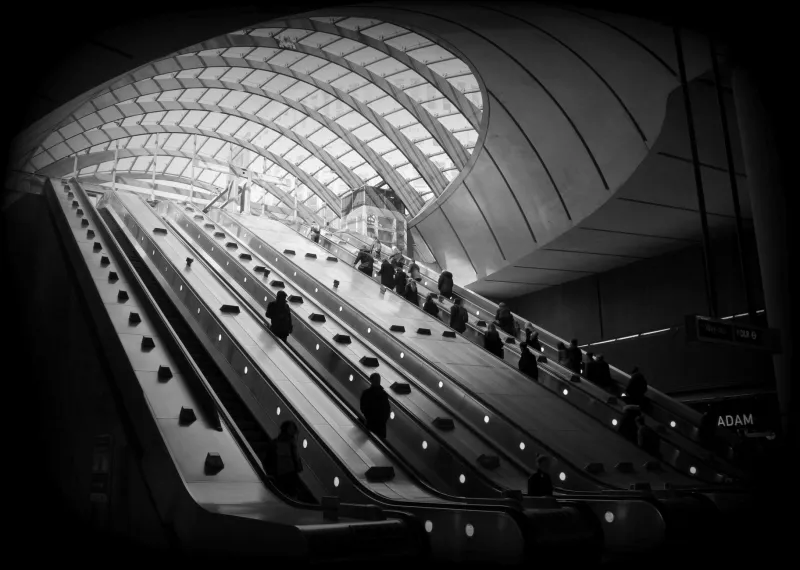
Stand on the right, walk on the left. You'll see it on signs, hear it in announcements, and still watch a family of four fan out across the full width with a suitcase at the bottom. The reason it matters isn't tidiness. On a deep station at rush hour, the left-hand lane is a pressure valve — people who can move faster do, and everyone behind them benefits.
The practical version: step on, commit to your side, and don't stop at the top to check your phone or reorganise your bag. The top of an escalator is a pinch point, and a pinch point with a stationary person in it becomes a queue within about four seconds. Walk ten paces clear, then stop. If you're lugging a case, keep it in front of you or tight to your side rather than trailing behind on the walking lane, where it becomes a trip hazard with wheels.
Let them off first
This is the one rule that, if everyone followed it, would fix roughly half of all Tube frustration. A full carriage empties faster than it fills — but only if the people outside stand to the side of the doors rather than in the middle of them. When boarding and alighting compete for the same square metre, both slow down.
The local habit is a small sideways step. Position yourself to one side of the doorway, let the flow come out, then step in. It looks passive. It is actually the fastest option available. On a busy platform you'll see regulars doing it without thinking, like a dance move they learned years ago.
The bus stop queue that isn't quite a queue
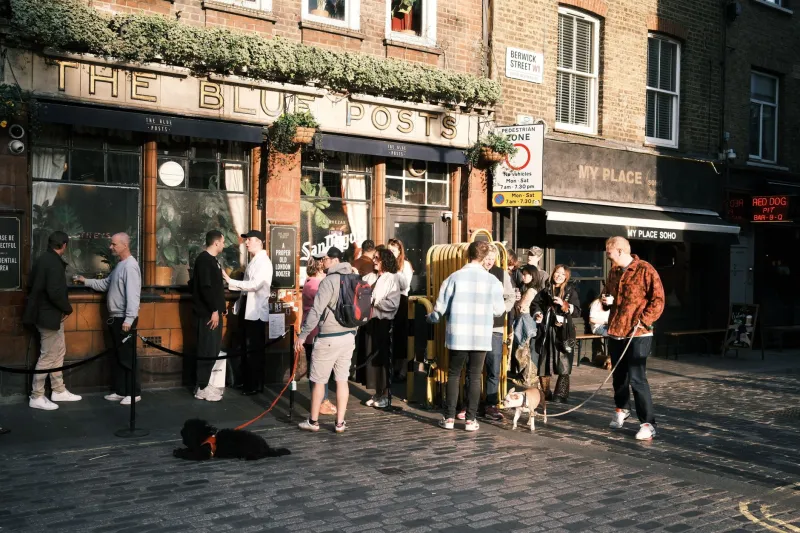
London bus stops can look like a free-for-all to a visitor, and then someone will give you a look that suggests you've committed a minor crime. The truth is somewhere in between: it's a queue, but it's a queue made of memory and positioning rather than rope barriers.
Read the stop before you join it. Who was there first? Who is standing nearest the pole, and who is leaning against the shelter? People generally board in roughly the order they arrived, and the person who has been waiting twenty minutes for the 73 will not be thrilled if you step in front because you happened to be nearer the door. If you're unsure, a short question sorts it — 'are you waiting for this one?' — and costs you nothing.
Once you're on, keep moving down the bus. The front of a double-decker fills first because it's where people stop, and then the upper deck sits half empty while the driver tells everyone to move along. Tap your card or phone once, on the way in, and don't hover by the driver asking directions while the queue builds behind you.
Pavements have lanes too
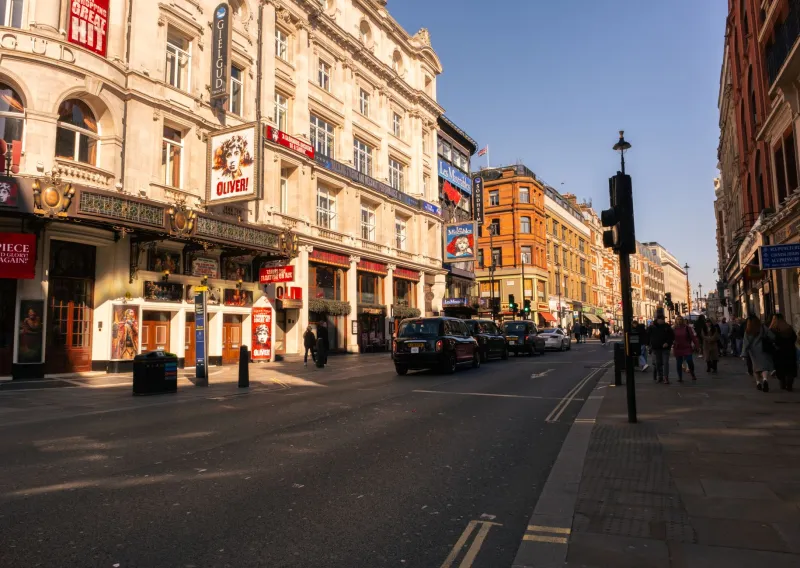
Oxford Street at 11am is not a pedestrian paradise; it's a road with no markings. The etiquette is the same as the escalator, just less formal: keep left-ish, don't stop dead in the middle of the flow, and if you need to check a map, step to the side — ideally against a shop window or a wall, out of the current.
Suitcases are the great exception that proves the rule. A wheeled case behind you is invisible to everyone but you, and it will clip ankles on a crowded pavement. Pull it beside you in busy areas. Groups of four walking abreast are lovely for catching up and terrible for everyone else; drop to two when the pavement narrows. Umbrellas, meanwhile, have their own micro-etiquette: tilt them up and away when you pass someone, and never open one under a shop canopy.
How to read a crowd in three seconds
Most of the skill here is just watching. Headphones on, brisk pace, eyes fixed ahead: that person is commuting and will not thank you for a question. Slower pace, head turning, phone held out like a compass: that person is a visitor too, and may well be about to ask you something.
The half-step test is useful. If you're unsure whether someone has seen you, shift half a step in their direction. If they adjust, they've clocked you and you can proceed. If they don't, wait. And save your questions for the right places — by the ticket machines, at the top of the platform, near a station map. Not mid-escalator, and not in a doorway.
The three habits that carry a short trip
If you remember nothing else, remember these. First, let people off before you get on. It's the single highest-value habit on London transport and it works on trains, buses and lifts. Second, keep the pinch points moving. Tops of escalators, ticket gates, bus doors and platform entrances are not places to pause, regroup or check a booking. Third, stand right and walk left, and take your backpack off on a crowded carriage. A bag on your back takes up the space of a person and nobody can see around it.
None of this is about being told off. It's about the fact that London is a city of eight million people sharing some very old tunnels, and the etiquette is what stops the whole thing seizing up. Follow the grammar and the city feels less like an obstacle course and more like a machine that's quietly letting you through.