Dead Battery, Live Trip: A Low-Tech Playbook for London Days
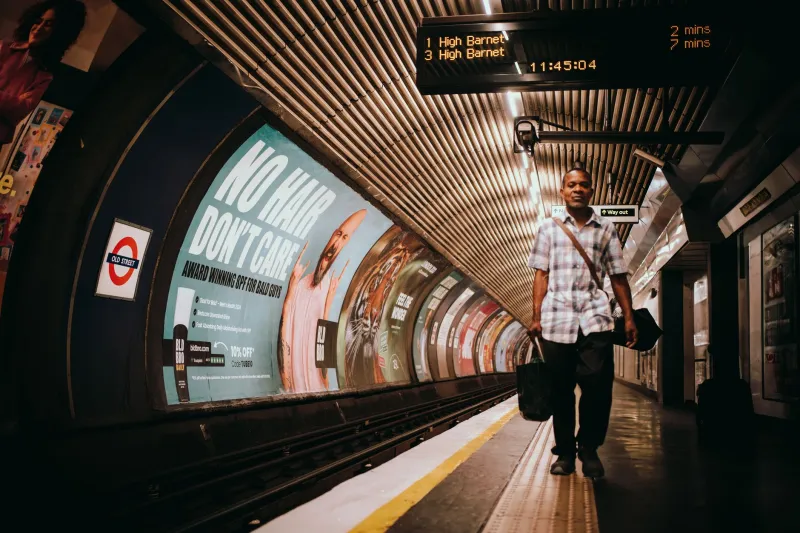
It happens at the worst possible moment. You are two stops from your hotel, the screen goes black, and the contactless card you were going to tap out with is inside the same dead rectangle. Nobody plans for it, and everybody assumes it will not happen to them.
It is November, it is dark by half four, and the last thing you want is to be standing on a platform trying to remember whether your stop was the one after the one with the funny name. Here is how to make that day keep moving.
Start by assuming the phone will let you down
Not in a doom-laden way. Just treat the mobile as a convenience rather than the system of record. If your tickets, your hotel address, your payment method and your sense of direction all live in one device with a two-year-old battery, you have built a single point of failure into a day that involves four modes of transport.
The fix is not complicated: duplicate the essentials onto things that do not need charging, and know who to ask when the devices give up.
The physical card is the plan, not the backup
The single most useful thing in your pocket is a contactless debit or credit card. It works at every Tube gate, on every bus, and it does not care whether your data connection is working.
One rule matters more than the rest: use the same card for the whole day. TfL's daily and weekly caps are calculated per card, so tapping in with your phone and out with the plastic version does not count as one journey. It counts as two incomplete ones, and you can end up paying two maximum fares for a trip that should have cost about three quid.
So carry the card loose, not buried in a wallet inside a rucksack. Put a second card somewhere genuinely different, because cards get lost and phones get nicked. A pay-as-you-go Oyster with a few pounds on it is another offline-proof option and still works perfectly well in 2026.
Cash is worth a tenner, but do not count on it. Plenty of London cafés and kiosks are card-only now, and the black cab that saves your evening will almost certainly prefer a card.
Paper, screenshots and a plastic wallet
Printed confirmations sound like something your parents would do. They are also the reason a lot of people get through disrupted days without a meltdown.
- Rail tickets. If you have an e-ticket, screenshot the code, but also print it at home on A4 and fold it into something waterproof. A QR code on paper does not run out of battery. If you bought a ticket to collect, the reference plus the payment card will print it at a station machine, and staff at the gateline can usually help if the machine refuses.
- Hotel details. Write the name, street, postcode and phone number on a card and keep it in your wallet. Useful when a driver asks where you are going, and useful when you are asking a stranger which way is north.
- Your route. For a Tube day, three lines scribbled on an index card is enough: line, direction, and the stop before yours. That is all you need to read the platform indicators.
What station staff can actually do for you
More than most visitors realise. London Underground ticket halls are staffed through the traffic hours, and there is a help point on every platform. If your phone dies after you have tapped in, find the person at the gate line, explain, and they can let you through and sort an incomplete journey rather than leaving you to be charged a maximum fare.
Ask at the gateline rather than at the machine. Machines cannot make judgement calls; people can. The same applies at National Rail stations, where staff can advise on the next departure, print a ticket, or point you at the right platform when the departure board is showing six possibilities and none of them make sense.
Battery-bank etiquette, briefly
A small power bank is a sensible thing to own. A few points of etiquette keep you popular:
- Charge it the night before, every night. A flat power bank is a heavy brick.
- Carry the cable you actually need. USB-C is not universal yet, whatever the internet says.
- Do not leave your phone unattended on a bench while it charges. It will be gone and so will the phone.
- In a café, a socket is a favour rather than a right. Buy a coffee, ask first, and unplug when you are topped up.
- If there is one socket and a queue, share it. Ten minutes each is plenty.
The ask plan
Without a phone, your two best tools are a free paper Tube map from any ticket hall and the simple act of asking. Londoners are more helpful than their reputation suggests, particularly if you ask a specific question: which platform for the Victoria line, or is this the right train for Bank.
Signage in London stations is genuinely good. Follow the line name and the direction rather than the app. If you are on a platform and unsure, ask the person next to you; they are going the same way and will know.
The two-minute kit
A physical bank card, a spare card in a different pocket, a tenner, a printed train ticket, a hotel address card, a charged power bank with the right cable, a paper Tube map and a pen. That lot weighs less than a paperback and will get you from Heathrow to a hotel bar without a single bar of signal.
Your phone will probably be fine. But the day does not need it to be.