Red Reader, Calm Head: What to Do When Contactless Fails in London

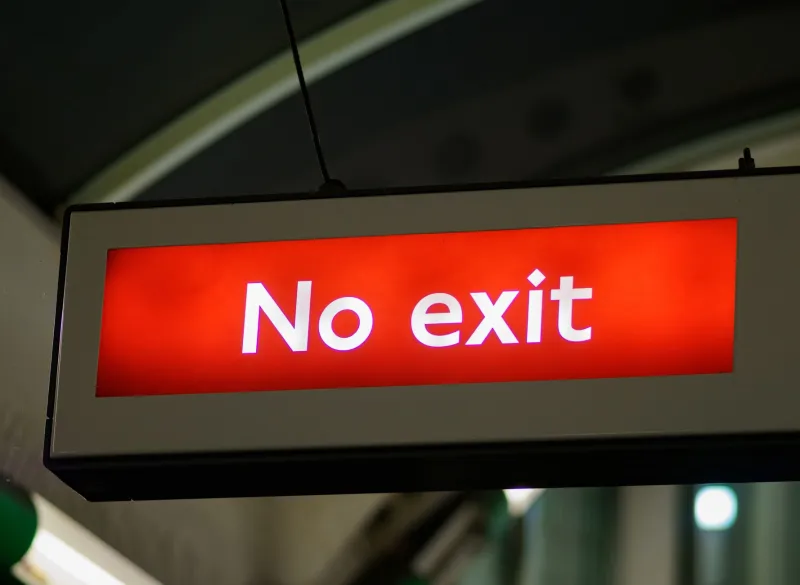
Photo: contactless card declined at London Underground ticket barrier stock photo, via images.pexels.com
It usually happens when you are already late. You stride up to the gate, tap your card, and the reader flashes red. Or you board a bus, hold your phone to the yellow pad, and get a small, unhelpful beep. The queue behind you shifts. Your brain suggests panic. Ignore it.
A failed contactless payment on London transport is a problem with a process, not a disaster. The trick is to slow down for thirty seconds, move out of the way, and work through the options in order. Here is the calm version.
First, stop moving
Do not push through the barrier behind someone else. Do not try the same card on five gates in a row while a crowd builds. Step to the side of the gate line, take a breath, and look at what you are actually holding.
On a bus, tell the driver plainly that your card has not worked, then step aside or alight if you need to sort it out. Drivers are used to this. What they cannot do is let you travel for free while you fiddle with your banking app, so keep the conversation short and practical.
The thirty-second diagnosis
Most failures fall into a few ordinary categories. Your card may be expired, frozen by your bank, or not enabled for contactless. Your phone may have run out of battery, lost its wallet link, or switched to the wrong card. A watch might be out of range or disconnected.
There is also card clash. If two contactless cards are sitting together in your wallet, the reader can pick up the wrong one or fail to read either. Take the card out and tap it on its own. If your phone failed, try the physical card. If the physical card failed, try your phone. Do not keep alternating randomly; give each method one clean attempt.
If you are visiting from outside the UK, check that your bank has not blocked the transaction as unusual. That is especially common on a first day of travel. A quick tap in your banking app can sometimes unlock it. If not, move on to the next step rather than standing at the gate willing it to work.
Find a human in hi-vis
At a Tube station, look for staff near the barriers, in the ticket hall, or by the ticket machines. If the station is unstaffed, use the help point. Say what happened in plain words: my card has been declined and I need to buy a ticket. Staff may be able to let you through to a machine, point you to the right one, or explain the simplest alternative. They cannot always override a payment problem, but they can stop you making it worse.
At a bus stop, there is no station assistant and no ticket machine. London buses are cashless, so a failed card really does mean finding another card, another device, or a different way to travel. If you are already on the bus, speak to the driver and get off at the next stop if you cannot pay. It is awkward, but it is much cheaper than a penalty fare.
Buy a paper ticket if you need one
Tube and rail stations generally have ticket machines that accept cards and cash. If your contactless card is the problem, a machine may still accept a different card, or cash if you have some. Buy the ticket you need for that journey and keep the receipt if you are unsure. It is not the most elegant solution, but it gets you moving.
If the station has no working machine and no staff, walk to the nearest staffed station or use a bus with a payment method that works. This is where a little flexibility saves the day. A ten-minute walk to a different station is often faster than standing at a dead barrier hoping for a miracle.
Do not drift into a penalty fare
Penalty fares are the part people underestimate. Travelling without a valid ticket, or staying on a bus after your payment has failed, can turn a small glitch into a costly argument. Do not tailgate through a barrier, do not assume you can sort it out at the other end, and do not stay on a bus if the driver has told you the payment has not gone through.
If you have already tapped in and cannot tap out, find staff before you leave the station. Explain the situation. Revenue protection staff see failed cards regularly, but they are not mind readers. A calm explanation and a willingness to pay usually goes further than a story that starts halfway through.
Reroute without losing the day
Once you have a ticket, or a working payment method, rejoin your day. If the failure has cost you twenty minutes, trim the plan rather than scrapping it. Skip the coffee stop, take the bus instead of the Tube, or walk the last stretch. London is compact enough that one missed connection rarely ruins an itinerary.
If you are heading to a timed booking, message ahead if you can. Most attractions and restaurants would rather know you are running late than have you arrive flustered. And if your card is genuinely unusable, use cash for a taxi only as a last resort. It is the fastest way to turn a payment glitch into an expensive afternoon.
A five-minute checklist to save before you arrive
- Carry a second physical card, kept separately from the first.
- Check that your card is enabled for contactless and for overseas transactions if you are visiting.
- Keep a small amount of cash for ticket machines, just in case.
- Make sure your phone wallet has a backup card loaded and that your phone will last the day.
- Take your card out of your wallet when tapping to avoid card clash.
- Know where the staffed stations are on your route, or save the TfL travel information page before you leave.
The red reader is not a verdict on your whole trip. It is a small, solvable interruption. Step aside, find a human, buy a ticket if you must, and keep the day moving. That is the whole plan.