The Door You Didn't Notice: London Station Exits That Quietly Save You Time
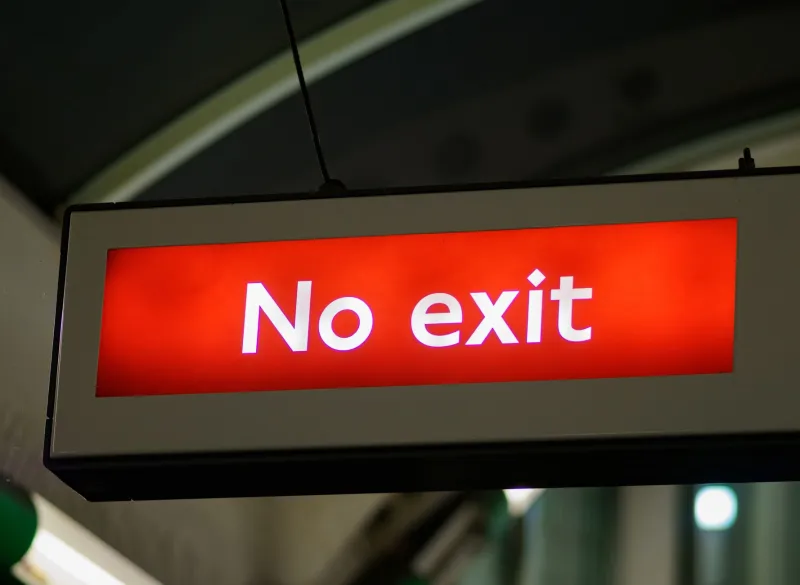
You have done the hard bit. You know which Tube line, which platform, which stop. Then you come up the stairs, blink into the daylight, and realise your destination is on the other side of six lanes of traffic. The train was fine. The exit was the problem.
London stations are not neutral holes in the ground. Each exit is a different version of the neighbourhood. Choose the wrong one at a busy station and you will spend ten minutes undoing a decision you did not know you were making. Choose the right one and the city seems to fold itself around your plans.
The exit is part of the journey
We tend to treat station exits as an afterthought — a thing that happens after the travel is over. But at somewhere like Waterloo or King's Cross St Pancras, the exit is the last leg of the journey. It decides whether you arrive at the South Bank facing the river or facing a taxi rank. It decides whether you walk straight into Soho or circle it like a lost delivery driver.
In 2026, the tools are better than ever. TfL Go and most journey planners now show station exit information, and many station maps label exits with letters or street names. The trick is to look before you tap out, not after. Once you are through the barriers and following the crowd, you are already being steered.
Read the map before the barriers
At any large station, pause for thirty seconds near the ticket hall. Look for the station map — usually a large board showing the platforms, the subway level and the exits above. You are not looking for the word "Way out". You are looking for the name of the street or landmark that matches where you are going.
This is the single most useful habit: match the exit to the street, not to the station. "Way out" tells you nothing. "Exit to South Bank" or "Exit to Bishopsgate" tells you everything.
Also check the signs inside the station, not just at the final staircase. Many big stations have subways that let you cross underneath the road and come up on the right side. If you surface first and then try to cross, you have made the job harder than it needs to be.
The crowd is not a compass. At tourist-heavy stations, the main exit is often the one that faces the most obvious landmark — or the taxi rank — and that is rarely where a local would go.
Three stations where the obvious door is wrong
Waterloo: the river is not always straight ahead
Waterloo is a good place to start because it is enormous and has several ways out. If you are heading for the South Bank, the London Eye, the Royal Festival Hall or a walk along the Thames, do not simply follow the main concourse crowd towards the taxi rank and station forecourt. Follow the signs for the South Bank exit. It can put you on the riverside side without a road crossing and without the slow shuffle across the front of the station.
The difference is small on a map and large in real life, especially on a weekend when the forecourt is busy.
King's Cross St Pancras: stay inside if you can
King's Cross St Pancras is less a station than a small underground city with a rail network attached. If you are heading to St Pancras International for a Eurostar, the worst thing you can do is surface onto Euston Road and try to work it out from there. Follow the internal signs for St Pancras International. The two stations are connected underground, and using that connection saves you the pavement pantomime of crossing roads and queueing at the wrong entrance.
For the British Library, the same principle applies in reverse: check which side of Euston Road you need before you commit to a staircase. The library is close, but the road is not one you want to cross twice.
Oxford Circus: four corners, four different days
Oxford Circus is the classic example of an exit that changes your experience of a neighbourhood. The station has exits on different corners, and choosing the right one can put you on the Soho side, the Mayfair side or the Carnaby side without a single extra crossing.
If you are heading for Carnaby Street or Liberty, think about which corner points you in that direction before you climb the stairs. If you are heading into Soho for dinner, the wrong corner can mean waiting at the crossing while the right one lets you slip straight into the side streets.
The station name is the same. The exit is not.
Watch for street-level cues
Once you are above ground, use the city itself as a map. Look for street name plates, the direction of the river, the side of the road the landmark is on, or the nearest cross street. If you can see a taxi rank and a chain coffee shop, you are probably at the main exit — which is often the slowest one.
A useful rule: if your destination is a specific building, ask which street it is on, then find the exit named for that street. If your destination is a neighbourhood, ask which side of the station it sits on. The answer is usually on the station map, even if it is not on the first sign you see.
Build the exit into your itinerary
This is where a bit of planning pays off. When you are working out a London day, do not stop at the station name. Add the exit to the plan. "Tube to Tottenham Court Road, Dean Street exit" is a more useful instruction than "Tube to Tottenham Court Road".
If you are using a journey planner, check the exit information before you set off. If you are changing lines, look at the platform signs for the street names at the top of the stairs. And if you are meeting someone, agree on an exit, not just a station. "Meet you outside the Bishopsgate exit at Liverpool Street" is a much better plan than "meet you at Liverpool Street".
For a multi-stop day, order your stops so that you arrive at the exit that faces the next place on your list. It sounds fussy. It is actually the opposite: it removes the small, annoying decisions that make a day feel longer than it is.
When you get it wrong
You will sometimes get it wrong. That is fine. The important thing is not to double back on autopilot. If you are still inside the station, look for another exit — many stations have subways that let you cross underneath the road. If you are already outside, walk one block to a proper crossing rather than trying to dart across. Use the station as a compass and move forward, not back.
The ten-minute saving is real, but it is not really about ten minutes. It is about arriving in the right frame of mind. A day out in London is made of small transitions: platform to street, street to gallery, gallery to tea. Get the first one right and the rest tends to follow.