Between Two Trains: A Platform-Speed Guide to Eating at London’s Terminals
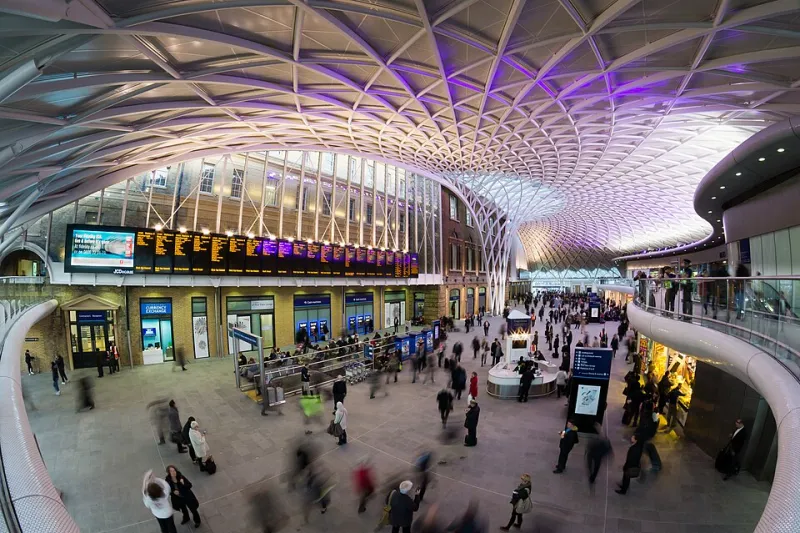
Photo: Colin, CC BY-SA 3.0, via Wikimedia Commons
Station food has a different job from restaurant food. It has to be close, predictable and easy to abandon the moment a platform appears on the board. A brilliant sandwich is no use if you are still queuing when your train starts boarding.
So this is not a taste test. It is a ranking of London’s big terminal food options by exit speed: how quickly you can get from concourse to counter to table and back to the platform, with luggage in tow and one eye on the departure screen.
The minutes-first framework
Before naming stations, use this simple rule. It works better than any menu.
- Under 15 minutes: do not sit down. Buy something cold or pre-packed from a station M&S, Greggs or similar, and eat on the train if your operator allows it. Keep the receipt and your ticket handy.
- 15–25 minutes: counter service only, and only if the queue is visibly short. Pret, Leon, Itsu and Wasabi-style counters are built for this. Stay on the concourse side of the barriers.
- 25–40 minutes: you can consider a food hall or a proper seat, but only if your platform has not been announced. Once it is, the platform wins.
- 40–60 minutes: a station-adjacent food hall becomes realistic. Pick one with multiple counters so you are not stuck behind a single slow queue.
- 60 minutes plus: sit down properly, but still check the boards before ordering a second drink.
The ranking below assumes a normal weekday, one wheelie bag and no mobility needs. Queues shift at peak times, engineering works can change footfall, and station layouts are not static. Treat it as a starting point, not a timetable.
5. Waterloo — grand, busy and easy to underestimate
Waterloo is a superb station for trains and a frustrating one for a quick meal. The concourse is wide, the platforms are spread out and the distance from a comfortable seat to the right platform can eat five minutes without warning.
For a tight connection, stay upstairs and stay simple. The concourse food shops are your friend: pre-packed sandwiches, fruit, pastries and coffee. If you have 30 minutes and your platform is already showing, buy and go. Do not disappear into the lower levels or across to a nearby street for something more interesting.
Waterloo earns fifth place because its size works against exit speed. It is not bad — it is just a station where a sit-down meal has to be earned with time. Eat here if you have 25–35 minutes and no platform announcement, or under 15 minutes and only need supplies.
4. Euston — quick if you stay on the concourse
Euston is not a place to linger, which is oddly useful. The main concourse has the familiar quick-eat names, and because the station is compact by terminal standards, you can often be back at the boards within a couple of minutes.
The catch is seating. It is limited, often crowded and not designed for a traveller with a large suitcase. Treat Euston as a standing lunch station. Buy, step to the side, check the screen, eat standing or take it on board.
Euston is fourth because it is fast but not comfortable. Eat here if you have 15–30 minutes, your platform is not yet announced and you are travelling light. If you have more than 40 minutes, consider walking five minutes away from the station for a calmer table — but only if you are confident about the boarding time.
3. Liverpool Street — the City shortcut
Liverpool Street has a useful trick: you can eat well without going far. The station concourse and the immediate surrounds give you quick counters, coffee and takeaway options, while Broadgate Circle and the streets around it add a few more sit-down choices within a short walk.
That makes Liverpool Street a strong middle-ranked station. It is not as roomy as Paddington for food-hall eating, and peak City queues can be brutal, but the exit speed is good if you resist wandering. Stay close, order something that arrives quickly and keep your bag between your feet rather than on the spare chair.
Eat here if you have 25–40 minutes and want a proper counter meal without leaving the station area. Under 20 minutes, skip the sit-down options and grab something from the concourse.
2. Paddington — the food hall that earns its keep
Paddington has become a genuinely useful station for a longer connection. The food hall option near the station gives you multiple counters, more seating odds and enough space to park a suitcase without apologising to everyone within a metre. That combination is rare at a London terminal.
It is not the fastest choice if your train is imminent. The walk back to the right platform can take longer than you think, especially at busy times. But for a 45-minute connection, Paddington is the station where a food hall actually makes sense rather than simply looking good on paper.
Paddington takes second place because it balances food choice with a realistic exit plan. Eat here if you have 40–60 minutes and your platform is not yet called. For anything under 25 minutes, use the concourse shops and keep moving.
1. King’s Cross — the best all-rounder
King’s Cross wins because it gives you options at every speed. The concourse has the reliable quick counters for a 15-minute dash. A few minutes further out, Granary Square and the streets behind the station offer more substantial eating for longer connections. The platforms are close enough that you rarely feel stranded.
Seating inside the station is still a scrum at peak times, so do not assume you will find a table with a suitcase beside you. The smarter move is to decide before you buy: standing lunch on the concourse, or a proper sit-down only if you have 45 minutes or more and the boards are quiet.
Eat here if you have 30–45 minutes and want the best chance of a decent counter meal with a fast exit. With 50 minutes plus, walk to Granary Square. With under 20 minutes, stay inside and keep it simple.
The tight-connection picks
If you only remember one thing, remember this: the best station food is the food you can leave. Order ahead where the app lets you, check the platform screen before you join a queue, sit near the exit rather than deep inside a food hall, and never order a hot sit-down meal when your train is already showing as boarding.
A station meal should buy you time, not spend it. Pick the option that matches your minutes — not the one that looks best on a menu board.