One Bottle, All Day: Refilling Without Breaking Your London Route
Photo: SPC Buck Brignano, Public domain, via Wikimedia Commons
London is a walking city, and walking makes you thirsty. The temptation is to buy a chilled bottle at the first station kiosk, then another outside the museum, and by late afternoon you have spent enough for a decent lunch on water you could have got for nothing. The smarter move is to carry one bottle and refill it as you go — but only if you know where the taps actually are, and when they are switched off.
Start with one bottle, not four
A 500ml to 750ml bottle with a wide neck is the sweet spot. Wide necks are easier to fill at awkward station taps, easier to rinse, and less likely to harbour a smell if you forget it in a bag for a day. A bottle with a loop or carabiner clip saves rummaging. If you are travelling with children, one bottle each is usually lighter than a family-sized bottle plus cups, and it gives everyone a job at refill stops.
Hygiene is not glamorous but it matters. Empty and rinse the bottle each evening, and do not leave sugary squash or tea in it overnight — that is how a bottle starts tasting like a cupboard. If you would not drink the tap water at home without thinking about it, you will be fine in London; the mains supply is safe. The bigger issue is the bottle itself, not the water.
The dependable refills: stations first
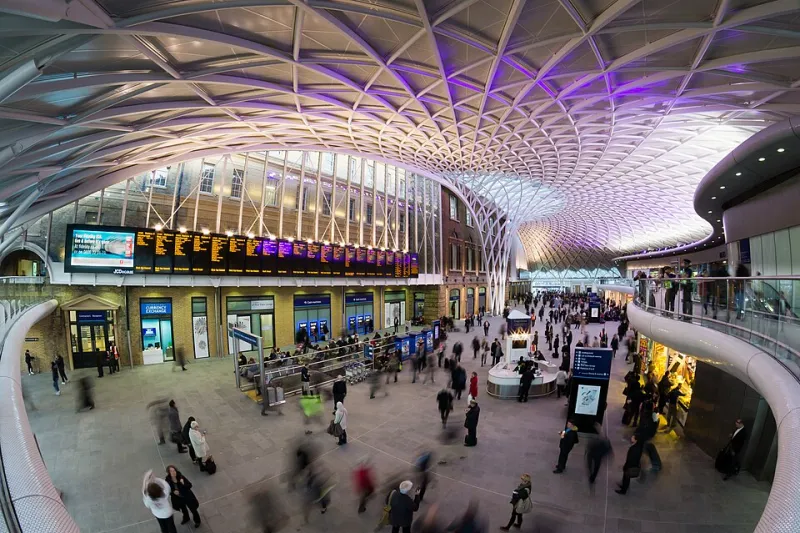
Major rail terminals are the backbone of a sensible refill plan, especially in colder months. Waterloo, Paddington, King's Cross, Euston and Victoria all have drinking water points somewhere on the concourse or near the toilets, though signage varies and not every point is obvious from the main hall. Fill up when you arrive, before you head for the Tube, and again before you leave. These are indoors, generally switched on year-round, and positioned exactly where a day out starts and ends.
Smaller Tube stations are a different story. Do not build a plan around finding a fountain at a deep-level Central London station; many simply do not have public drinking water. Treat stations as a top-up opportunity when you are passing through a big terminal, not as a guarantee at every stop.
Parks and riverside fountains: seasonal honesty
The South Bank has drinking fountains along the river walk, and the Royal Parks mark some fountains on their maps. When they are working, they are brilliant — free, fast, and placed exactly where tourists get thirsty. The honest caveat is seasonality. Many outdoor fountains are turned off from late autumn through winter to prevent frost damage, and a fountain that ran in July may be dry and taped over in November. If your day depends on an outdoor fountain between November and March, have a cafe or station backup in mind. And do not refill from ornamental fountains; Trafalgar Square's water features are for looking at, not drinking.
The polite cafe ask
Cafes and pubs are the flexible middle layer. The etiquette is simple: buy something, ask at the counter rather than from a table, and avoid the middle of the lunch rush. An independent coffee shop is often happy to fill a bottle if you have just bought a tea; a busy chain may have a policy that varies by branch. The Refill app lists participating cafes, but treat listings as a starting point rather than gospel — opening hours and willingness change. A quick 'would you mind topping this up?' goes a long way.
A workable central route
A simple south-to-north day shows how refills fit around transport and sights. Start at Waterloo, fill at the station, then walk the South Bank. If the riverside fountains are on, top up near the Eye; if not, a cafe stop near Tate Modern covers you. Cross the Millennium Bridge, walk to St Paul's, and use a cafe or a station stop at Blackfriars or St Paul's before heading to Covent Garden. Covent Garden itself is not a station with a reliable public fountain, so plan your last fill before you arrive. The point is not to hunt down every fountain — it is to top up at the moments you are already stopping.
The £4 bottle trap and the bag you did not need
Buying water is not a moral failing, but the cost adds up quickly in central London. Two or three bottles a day can easily hit £8 to £12, which is a decent sandwich or a couple of bus fares. Carrying one bottle also keeps your bag lighter, which matters more than people expect on a day that includes stairs, escalators and a few miles of walking. Fill before you leave the station, fill before you board the train home, and you will rarely need to buy a bottle at all.
Winter caveats and a simple rule
In late autumn and winter, favour indoor refills: mainline stations, cafes, museums with water fountains near the toilets. Outdoor park fountains are a bonus, not a plan. Rinse the bottle, do not let it roll around half-full for days, and if the water tastes odd, empty it and start again. The rule is simple: one bottle, refill where you are already stopping, and keep a indoor backup in mind. Your shoulders, your bank balance and your itinerary will all be happier for it.