The Day Before, Done Gently: A 24 December 2026 London Transport Plan
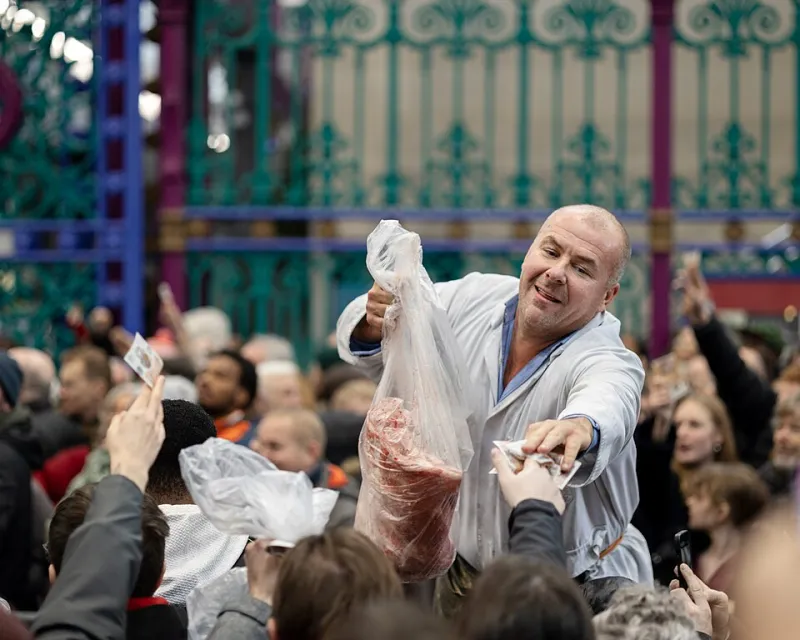
Photo: JM Poilpre, CC BY-SA 4.0, via Wikimedia Commons
Christmas Eve has a habit of looking more open than it really is. The shops are trading, the pubs are busy, and central London still has that pre-Christmas hum. But 24 December 2026 is not a day for a loose plan. TfL services can switch to special timetables, some stations close earlier than usual, and the buses that usually rescue a disrupted Tube journey may be caught in the same festive crush. The trick is not to squeeze in one more sight. It is to build a day that can end early without ruining itself.
Find the real last train before you find a lunch booking
Start with the journey home. Not the rough idea of it, the actual service you intend to catch. If you are heading back to a National Rail station, check the operator as well as TfL. If your route involves a coach, a flight or a Eurostar, check that operator directly too. Christmas Eve timetables are often published closer to the date, so the useful move is to look on the day before and again on the morning of 24 December.
Look for the last viable service, not the last train on the board. A train that leaves at 20:00 is not much use if the final Tube connection to the station is earlier, or if the station itself is closing early. Work backwards: departure station, interchange, local leg. Add a buffer that feels slightly too generous. On Christmas Eve, that buffer is the plan.
Save screenshots of the route and the last few services. Phone signal can be patchy in crowds, and a saved image is faster than reopening five tabs while a platform announcement changes everything.
Build the day in shrinking rings
The most forgiving Christmas Eve day has three rings. The first is close to where you are staying or where you will leave from. The second is one central cluster, reached with a single straightforward journey. The third is the return leg, and it should not be an afterthought.
In practice, that might mean a local morning walk, a booked lunch in one neighbourhood, one exhibition or shop you actually care about, and an early dinner near your departure station. It does not mean Oxford Street, Covent Garden, the South Bank and a market, all before 5pm. That version of the day works only if every train runs and every crowd behaves. Christmas Eve is not famous for either.
Pick one anchor. A lunch, a show, a gallery slot or a specific walk. Everything else is optional. If you are travelling with children or a group, agree the anchor and the exit time before anyone puts their coat on. A shared hard stop prevents the classic 5pm debate in which everyone is tired and nobody wants to be the one who calls it.
The classic trap: being central when the network tightens
The Christmas Eve trap is not usually a cancelled train. It is being on the wrong side of central London when the network starts to thin out. You stay for one more look at the lights, one more drink, one more browse. Then a line suspends, a station goes exit-only, and the quick hop back to your train becomes a taxi hunt in heavy traffic.
Set a geographical rule rather than an optimistic intention. If your train is in the evening, aim to be back near the departure station by late afternoon. If you are staying centrally, aim to be within walking distance of your base before the busiest part of the evening. The point is not to avoid fun. It is to avoid spending your last hour in London watching a departure board from the wrong postcode.
Crowds around the main shopping streets and festive lights can make even short walks slow. Pavements fill up, buses get held, and station entrances become one-way. A route that looks simple on a map can take twice as long. Treat walking as the reliable option only when it is genuinely short and you know the streets.
What to check before you leave, and again at lunch
Before you head out on 24 December 2026, check TfL status and planned closures, National Rail engineering work, and any operator-specific Christmas Eve notice. Look at station closures as well as line suspensions. A closed station can turn a two-stop hop into a 20-minute walk you did not budget for.
Check again at lunch. Festive timetables can change through the day, and an incident on one line can send crowds to another. The TfL Go app and the TfL website are the starting points, but do not ignore station staff. They often know about the local exit or the bus diversion that the app has not yet phrased neatly.
Have a backup payment method and a charged phone. Contactless is brilliant until a reader fails or a card is declined. A second card or a phone wallet is not paranoia on a day when everyone is tapping at once. If you are in a group, agree a meeting point before you split up. Christmas Eve is a bad day for a loose "we'll find each other" plan.
A simple shape for the day
A workable Christmas Eve might look like this: a slow morning near your base, one booked lunch, a short walk or a single attraction, then an early return. If your train is at 19:00, be at the station for 17:30. If your train is at 21:00, do not start a new area at 18:30. Have an early dinner rather than a late one. Book the table, because Christmas Eve is not a day for wandering into a restaurant at 7pm with six people and hope.
Keep the afternoon light. A market, a park, a church, a pub with a fire, a short gallery visit: these are Christmas Eve activities. A four-stop Tube safari across London is not. The day should feel like a gentle matinee, not a full production.
If it starts to go wrong
Decide now what you will do if your line is suspended. If you are close to your departure station, walk or take a bus. If you are far away and the clock is against you, head straight for the station by the most direct surface route, even if it costs a taxi. Do not chase a clever alternative across the city unless you have a clear time advantage. Sunk-cost sightseeing is how people miss trains.
If you are meeting someone, stick to the agreed point. If you are travelling with children, move earlier than you think you need to. If a station is exit-only or closed, follow the stewards rather than the map on your phone. They are managing a crowd, not trying to ruin your afternoon.
The exit is the plan
The best Christmas Eve transport plan is not the one that visits the most places. It is the one that gets you to your train, coach or front door without a scramble. Keep the day short, check the real last services, build in a generous return leg, and treat your departure time as fixed. London can still be lovely on 24 December 2026. It is just lovelier when you are not running for the last connection.